Charleston’s
First Choice for
Primary and
Urgent Care
A better way to get trusted care —
without the insurance hassle.
3 Easy Ways to Be Seen Today
Get care in the way that works best for you — in person, from your car, or virtually — all with the same trusted care.
In-Person Care
Walk in. Get treated. Get on with your day.
Walk in to either clinic for same-day primary and urgent care. No appointment needed. Average wait 10 minutes.
Walk In TodayDrive-Thru Testing
Fast testing without leaving your car.
Flu, COVID, and strep testing — quick and convenient. No appointment needed. Drive up anytime or schedule ahead.
Get Tested TodayVirtual Visits
Care from anywhere — within hours.
Video visits for eligible primary care, urgent care, mental health needs & Weight Loss. Same-day availability with prescriptions when appropriate.
Start Video VisitChoose how you want to be seen — and come in today.
No appointments. No insurance approvals. Same trusted care.
Care for Real Life — When You Need It Most
Same-day care for everyday health needs. No appointments. No insurance games. Clear pricing.
When You’re Sick or Just Not Feeling Right
Urgent Care
Fast answers. Real treatment. One visit.
- Cold, flu, COVID & strep
- Sinus, allergy & asthma care
- Nausea, migraines & rashes
- Urinary & minor infections
- Same-day prescriptions
When You’re Hurt But Not an Emergency
Urgent Care
Get checked, treated, and back to life faster.
- Sprains, strains & joint pain
- Minor fractures & injuries
- Cuts, burns & wound care
- Minor vehicle accidents
- On-site evaluations
Ongoing & Preventive Care That Fits Your Life
Primary Care
Primary care without the hassle.
- Annual wellness exams
- Chronic condition management
- Men’s & women’s health
- Preventive screenings & labs
- Sleep, fatigue & lifestyle care
Weight Loss & Coaching That Actually Works
Weight Management
Medical support. Real accountability. Lasting results.
- Provider-guided programs
- GLP-1 options available
- Ongoing coaching & support
- Labs & progress tracking
- Sustainable weight loss plans
Mental Health Support When You Need It
Behavioral Health
Accessible, private care for life’s challenges.
- Anxiety treatment
- Depression treatment
- ADHD management
- PTSD support
- Virtual or in-person visits
Work-Related Health & Compliance
Occupational Health
Keep your team healthy, compliant, and working.
- Employment physicals
- Drug & alcohol screening
- Workers’ injury care
- Vaccinations & testing
- Occupational health services
Most members use us for both urgent and primary care — one relationship, one place, no bouncing between providers.
You’re Not a Number.
You’re Family Here.
Average wait under 10 minutes
Same-day care when you need it
Membership means no surprise bills or stress
We take the time to know you and care for you like family
Right here in Charleston.
One Membership. Total Care.No Insurance Needed.
Built for self-employed workers, uninsured families, hourly teams, and small businesses across Charleston. $0 member visits, same-day care, no insurance hassle.
- 24/7 telemedicine — day or night
- Call from anywhere — campus or home
- Student Wellness Check-Up
- Stress, anxiety & depression support
- No copays, no bills sent home
- Unlimited primary & urgent care
- Men’s and women’s health
- Mental health support included
- Annual Physical & Testing
- $0 per visit. Ever.
- Cover everyone on one plan
- Same-day care for sick kids
- Mental health for kids & parents
- Annual physical for every person
- One predictable monthly cost
- Same-day care = back to work fast
- Video conference visits — fast
- Cuts, sprains, X-rays — all on-site
- Men’s, women’s & mental health
- DOT & employment physicals included
- Reduces ER overuse, lowers claims
- Front-line care for high-deductible staff
- Mental health = less absenteeism
- Same-day care for sick employees
- ROI tracking for HR & leadership
- Private clinic access — no waiting areas
- White-glove account management
- Comprehensive preventive health plan
- Red light therapy access included
- Dedicated provider relationship
Getting started takes three steps.
Choose Your Membership
Pick the plan that fits — Student+, Personal+, Family+, or a business plan.
Start Immediately
Activate online and you’re covered right away — $0 member visits from day one.
Book Your Total Health Review
Your unhurried, whole-health baseline visit — included with membership.
Not a member? You can still walk in.
No membership required to be seen. Pay simple, upfront per-visit rates — $120 primary or urgent care, $40 virtual, $25+ testing. Always disclosed first. No insurance, no surprise bills.
2 Charleston Locations
Walk in to either location — no appointment, no wait.
Serving members across West Ashley, North Charleston, Mount Pleasant, James Island, Summerville, Goose Creek, Park Circle, Johns Island, and the greater Lowcountry.
North Charleston
5479 N. Rhett Avenue
North Charleston, SC 29406
Mon–Fri 8AM–8PM
Sat 8AM–5PM
West Ashley
2039 Savannah Highway
Charleston, SC 29407
Mon–Fri 8AM–8PM
Sat 8AM–5PM
This is a real clinical facility — not just a GP office.
On-site diagnostics and equipment to handle most conditions in one visit — no sending you elsewhere.
X-Ray
Imaging on site — same-visit results.
EKG
Cardiac monitoring on site.
In-House Labs
CBC, glucose, HbA1c, urinalysis.
Rapid Tests
Flu, strep, COVID & mono.
IV Hydration
Saline fluids administered on site.
Injections
Same-visit, non-vaccine.
Wound Care
Minor repair & dressings on site.
Ear Cleaning
Ear irrigation performed on site.
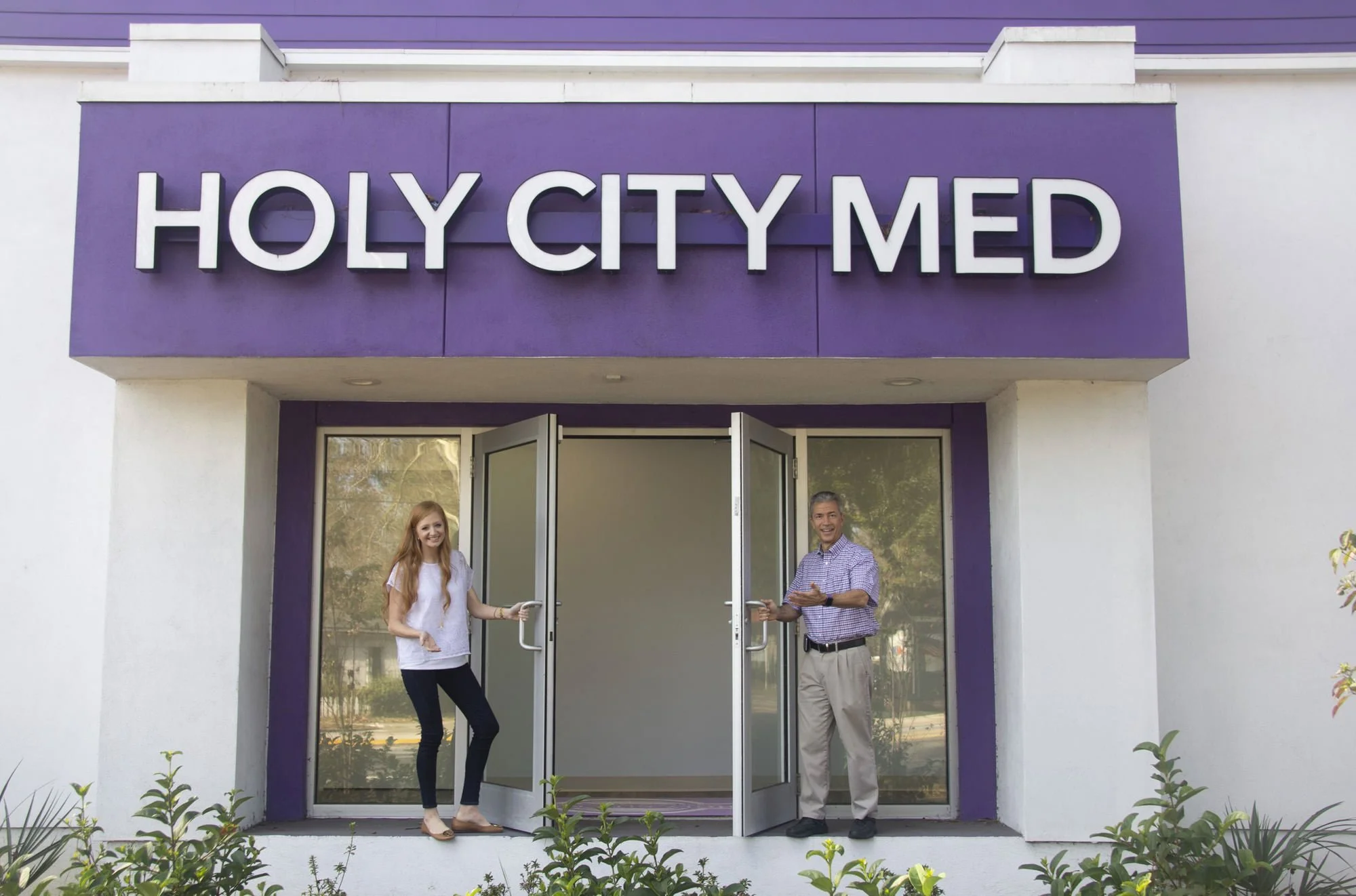
Built on one belief: take care of your people.
Our founder, Frank, grew up in his family’s Lowcountry businesses — a Piggly Wiggly and a Dairy Queen — where the dinner-table talk was as much about serving the community and looking after employees as it was about the day’s numbers. That lesson stuck.
Across 30+ years helping business owners grow — including 12 years building, running, and selling the HealthFirst medical clinics — he saw that local, same-day access to great healthcare was a real competitive advantage. Holy City Med was built on it: a way for companies that can’t afford their own multi-million-dollar clinic to give employees — and their families and roommates — free, unlimited care.
Because people who feel truly cared for never leave.
What Our Patients Are Saying
Real reviews from real Holy City Med patients on Google.
“Walked in with a bad sinus infection, was seen within minutes. No appointment, no insurance hassle. The team was incredibly kind and I left with a prescription the same visit. This is exactly what healthcare should be.”
“The membership pays for itself. I’ve been three times this month and paid exactly $0. The providers know me by name now, remember my history, and never rush me. Can’t imagine going back to a traditional doctor.”
“Brought my daughter in for a strep test via the drive-thru. We never even left the car. Results in minutes, prescription called in immediately. It was faster than a fast food drive-through. Absolutely love this place.”
Frequently Asked Questions
Everything you need to know about membership-based care at Holy City Med.
Still have questions?
Our team is happy to help. No pressure. Just answers.
Holy City Med is your primary care home — not just a walk-in.
Most people find us when they’re sick and need to be seen today. But the real value is everything after: a doctor who knows you, keeps you well, and catches problems early — all with $0 member visits.
Every new member gets a Total Health Review — an unhurried, whole-person look at your health that sets your baseline for the year ahead.
- Annual physical & screenings
- Chronic condition management
- Men’s & women’s health
- Mental health included
- Yearly Total Health Review
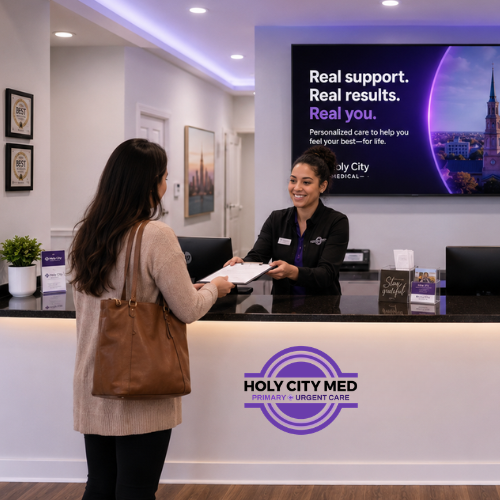
No insurance. No appointment.
No surprise bills.
Just real care — today.